A list of known electric pianos
| Name | Mechanism | Known Models | Dates | Other Notes |
|
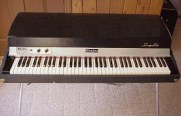
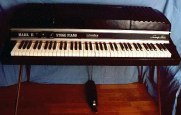
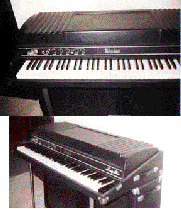
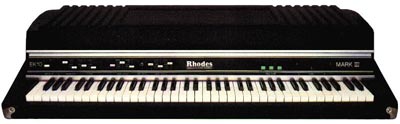
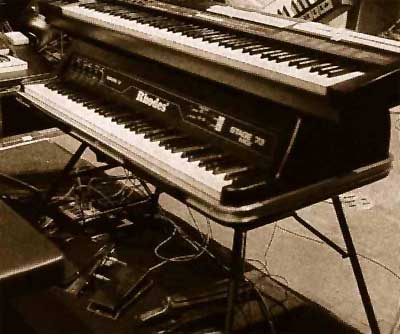
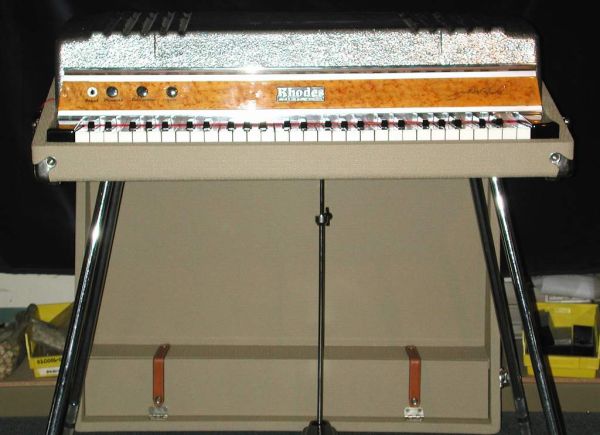
Major Key Rhodes Music Corporation |
Struck tuning forks, simplified piano
action, electromagnetic pickups |
Suitcase
Piano 73 and 88, Mk
I Stage Piano (73, 88) Mk
II Stage Piano (73, 88, 54) Home Piano Mk 7 (61, 73, 88) in Stage, Active and
Active plus MIDI models |
1959 - 1985, 2009 - 2011 |
Jump menu:
The Mk 7 range featured an improved Mk V-style
action, a lightweight fibreglass case and an overall
improved build quality compared to vintage models.
88-, 73- and (for the first time commercially)
61-note models were advertised, along with optional
"speaker platforms" similar to the old Suitcase
base. All three sizes were available in three
options; "S" (passive, equivalent to the old
Stage model), A (active preamp with stereo
tremolo, similar to the old Suitcase keyboard unit
but usable without a dedicated amp and speakers, and
"AM", as model A but with full MIDI
controller capabilities including polyphonic
aftertouch, split zones, pitch and modulation
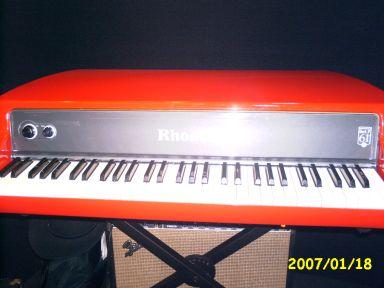
wheels. Initially, three colours were available;
black, white and red, all available in gloss
automotive paint or a rubberised "RoadTouch" matt
finish. ============================================================== Notes: * The reason that the model numbers appear to jump from Mk III to Mk V is that the "missing" Mk IV was a new design concept which never made it to production. Around this time there was also an ELECTRONIC piano made under the Rhodes name by ARP. |
| Vntage Vibe Tine
Piano (USA) |
Struck tuning forks, simplified piano action, electromagnetic pickups | VV44 VV64 VV73 |
2011 | Jump menu:
A new design from vintage keyboard renovation experts Vintage Vibe, using newly-designed action parts in a lightweight wood-and-fibreglass case similar to that of a Wurlitzer 200. 64- and 73-key models were introduced at the Winter 2011 NAMM show, in passive, active and active stereo versions. The fibreglass top is available in a wide range of plain and sparkle colours to order. Later additions include 44-note models (including a bass piano) and a less expensive 64 Classic with a black ABS top. |
| Vntage Vibe
Vibanet (USA) |
Clavichord action; strings struck by hard rubber tangents; electromagnetic pickups | Vibanet | 2013 | Jump menu:
Another new design from Vintage Vibe, this is the first new Clavinet-type instrument since Hohner stopped producing the E7 in the early 1980s. The Vibanet features onboard active EQ and auto-wah, plus improved tuning and damping mechanisms. |
| Vivi-Tone
Clavier (USA) |
Struck tone-bars; electromagnetic pickups | Clavier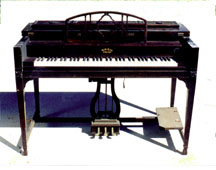 |
Late 1920s - early 1930s? | Jump menu:
Designed by Gibson Guitar's chief R&D engineer Lloyd Loar for his own short-lived Vivi-Tone company, which also produced electric guitars, basses, mandolins and fiddles. An earlier Loar design using sticky pads and electrostatic pickups was later adapted by Hohner for the Pianet. |
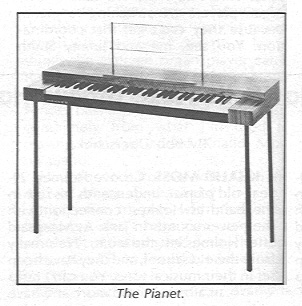
| Hohner Pianet (West Germany) |
Plucked reeds, sticky pads; electrostatic pickups,
later |
1962 - 1982? |
Jump menu:
T had black leather-cloth covering and
rubber-padded end-blocks. See also Clavinet Pianet Duo. |
|
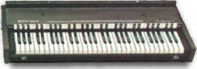
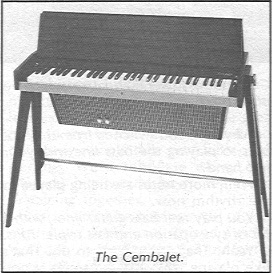
| Hohner Cembalet (West Germany) |
Plucked reeds, plectrum action; electrostatic pickups | 1961 - ? |
Jump menu:
|
|
| Selmer Pianotron (UK, East Germany) |
Original version; Struck strings; traditional piano
action with soundboard (?); 1960s version as Weltmeister Claviset |
Pianotron |
a) 1938 - ? |
Jump menu:
|
| Suette Valente Bossa (Brazil) |
)Struck reeds, electromagnetic pickups |
Suette, Valente, Bossa |
1980s - 1990s 2016 |
Jump menu:
Brazilian design, similar to Columbia Elepian. Made with varying keyboard ranges at a variety of workshops in Brazil. Later models branded "Valente". Relaunched at 2016 Winter NAMM show as "Bossa". |
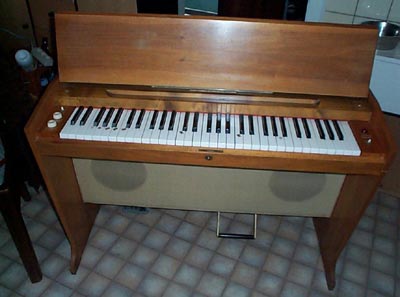
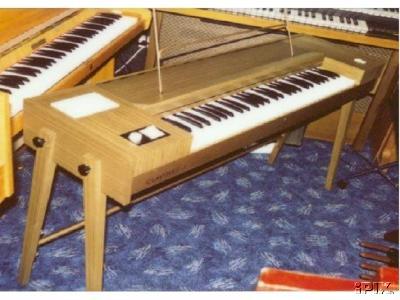
| Weltmeister
Claviset (East Germany) |
Plucked reeds, plectrum action; electromagnetic pickups |
Version with folding lid/music rest Version with wire music rest |
1963? - ? |
Jump menu:
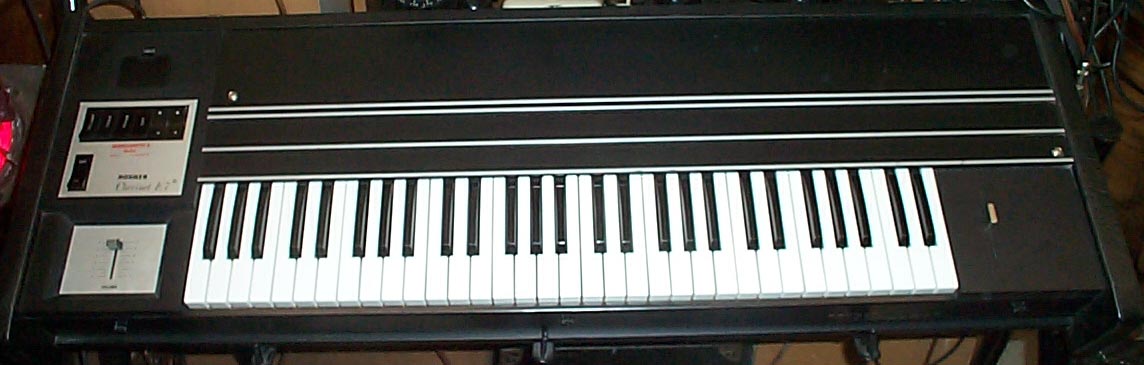
Made by long-established accordion and harmonica manufacturer in Klingenthal, formerly East Germany. Appears to be an approximate copy of the Hohner Cembalet, and is the only known Eastern European electric piano. Unlike Hohner instruments of the time, uses electromagnetic pickups. Later models somehow acquired a sustain pedal! Also a 2-keyboard version with "Matador" combo organ on top keyboard. The piano-and-organ version has no known equivalent in Hohner's range. There was also an electromechanical strap-on bass keyboard, called the Basset, closer in principle to the Rhodes Piano Bass than Hohner's electronic bass keyboard of the same name. There is also a (later) Claviset with a range of tabs for different sounds and 2 pedals |
| Hohner Clavinet (West Germany) |
Clavichord action; strings struck by hard rubber tangents; electromagnetic pickups | 1965 - 1980? | Jump menu:
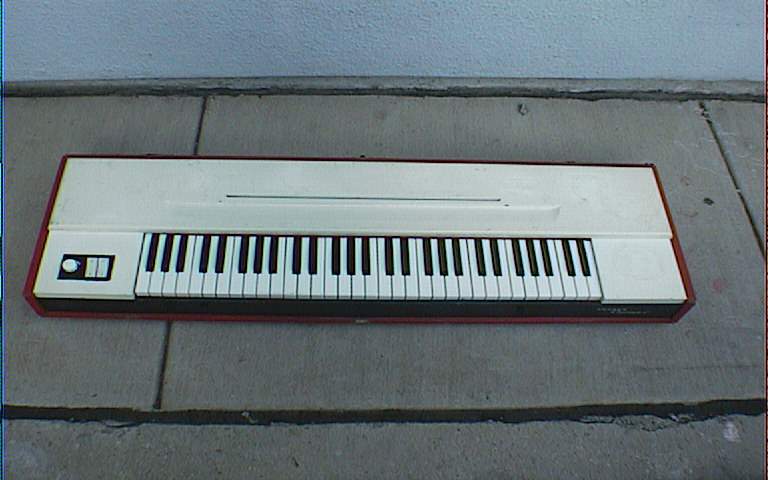
Invented by Ernst Zacharias. Essentially an electric clavichord. A unique early prototype exists with 54-note keyboard, traditional clavichord action and four filter controls; now in Keyboard Museum, Austria Clavinets I and II were domestic models with tone switches (II), rectangular veneered case, wooden legs and speaker (I). Clavinet L had reverse-coloured keys, "triangular" case, speaker and three "coffee-table" legs. Clavinet C was the late-60s "Stevie Wonder" model - red and white case, mechanically identical to Clavinet II. Clavinet D6 was classic wood-veneered 1970s model. D6 and later E7 had two pickups and various tone switches, plus variable damper. Duo combined Clavinet and Pianet actions in one keyboard. E7 was like D6 in a more roadworthy case. First E7s were actually labelled D6. Later E7s had angled damper slot. |
|
| Hohner
Electra-Piano (West Germany) |
Struck tuning forks, electromagnetic pickups |
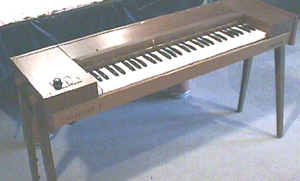
Electra-Piano (1970?) looks
like upright piano complete with two pedals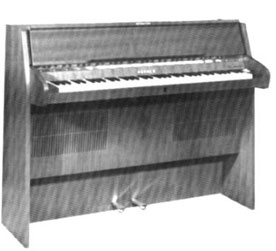 Electra-Piano T (1977?) is portable "stage" model 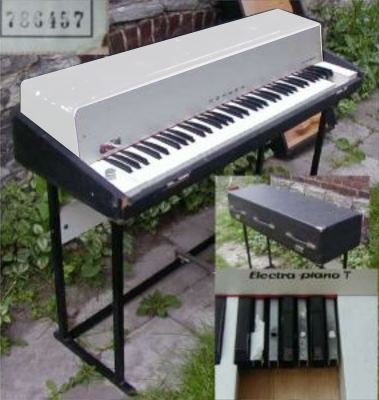 |
Late 60s - early 80s? | Jump menu:
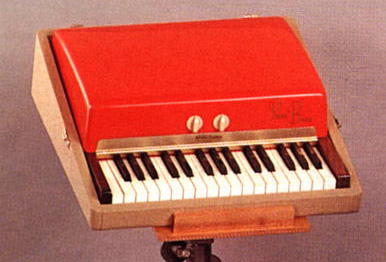
Similar mechanism to Fender Rhodes design. 72-note keyboard. Console model has wooden upright-piano-style case with 4 speakers and 20-watt solid-state amplifier. Sustain and soft pedals fitted; soft pedal is actually electronic attenuator. Electra-Piano T is late-70s "stage" model; looks like somewhat home-made copy of Fender Rhodes with white top; folding legs; no "soft" pedal, amp or speakers (although matching amp was available). Different mechanism from console model. Very rare. |
| Maestro (Japan) |
As Columbia Elepian | Maestro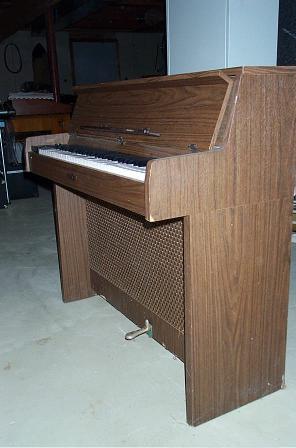 |
Late 1960s? | Jump menu:
Imported and re-branded console-model Columbia Elepian. Could Gibson have had something to do with it? (Maestro was a name used for Gibson's amplification and effects lines in the '60s). |
| Columbia Elepian (Japan) |
Struck metal reeds, traditional piano action, electrostatic pickups | Various portable
and console models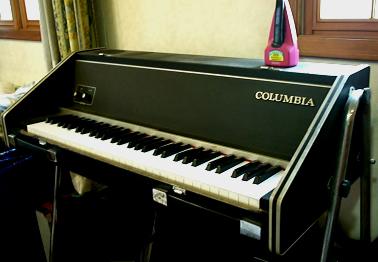 |
1962 - 1980? | Jump menu:
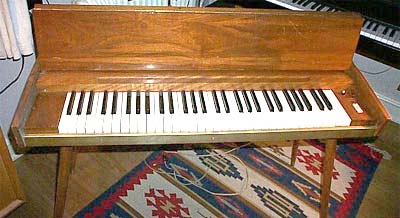
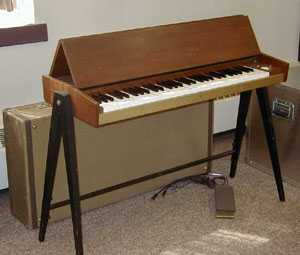
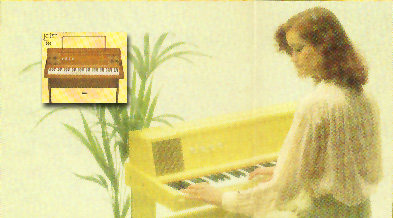
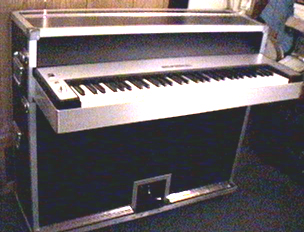
At least two models; portable "stage" model similar to Rhodes or Wurlitzer 200 and domestic model in lightweight wooden console case; looks like small upright piano. Similar mechanical design to Wurlitzer. 61 notes, sustain pedal, no tremolo. Elepian name still used for Denon's digital pianos. |
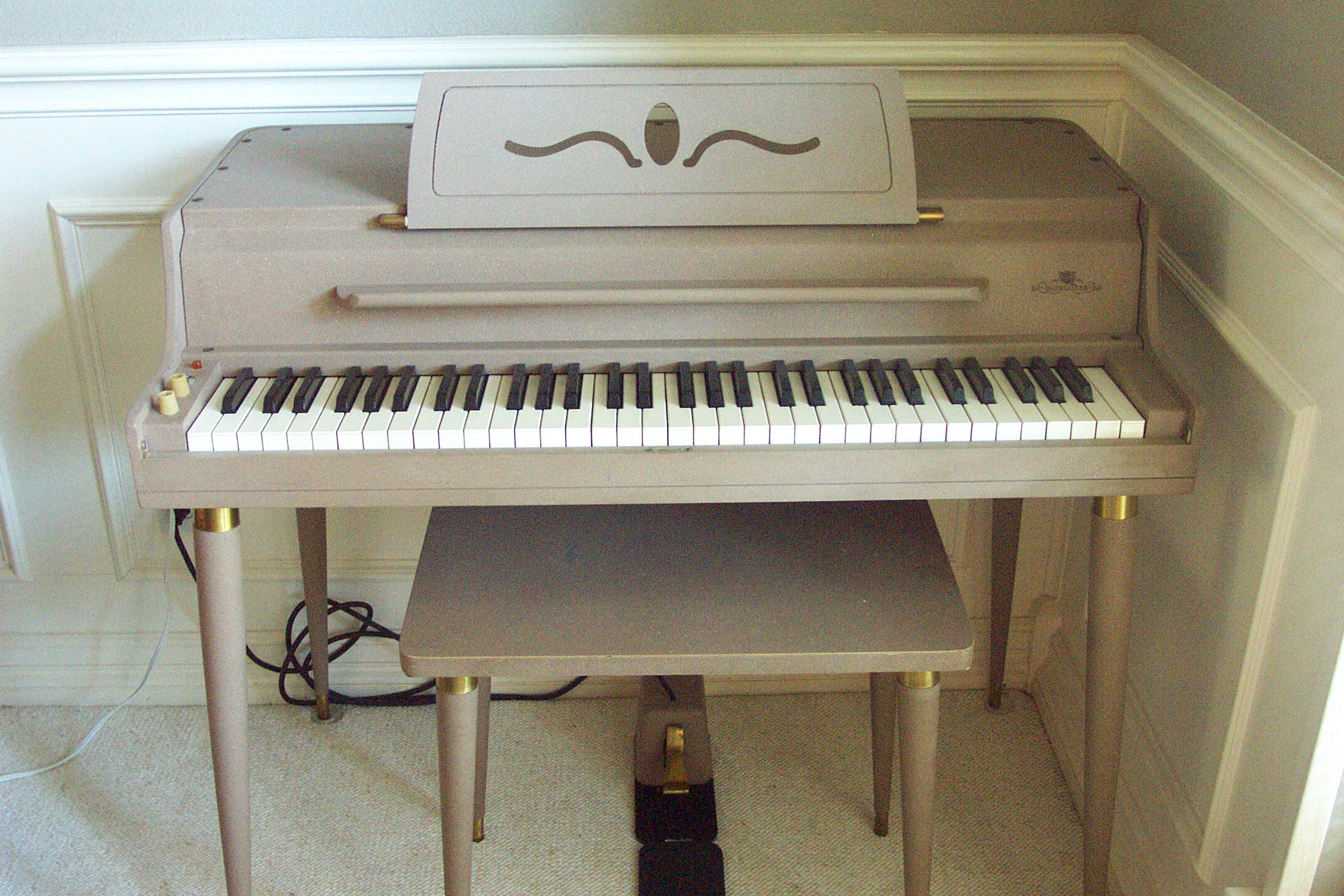
| Wurlitzer (USA, West Germany) |
Struck metal reeds, traditional piano action, electrostatic pickups. |
100 series (1954 - 1968) 700 series 200 series, most popular EP-200/200A
(1969 - early 1980s) 300
|
1954 - 1982? |
Jump menu:
|
| Musser
Electric Celeste (USA) |
Traditional celesta action; hammers striking metal plates; electrostatic pickups (?) | Electric
Celeste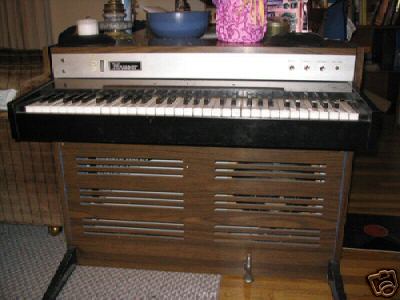 |
Late 1960s | Jump
menu:
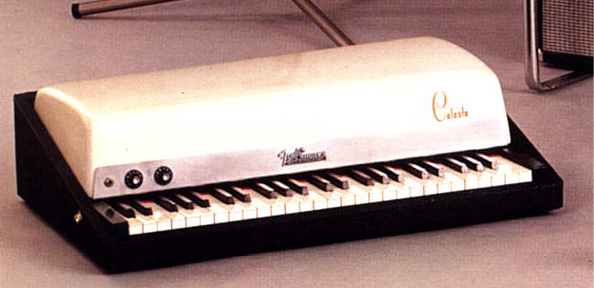
Designed by orchestral percussionist and composer Clair Omar Musser (1900 - 1998) and manufactured by his own company. 61-note keyboard. Has controls for bass, treble and tremolo - Musser was a vibraphone virtuoso. |
| Neo-Bechstein
(Siemens-Bechstein) (Germany) |
Struck strings; modified
piano action; electromagnetic pickups |
Neo-Bechstein | 1929 | Jump
menu:
Designed by Prussian Nobel Laureate Professor Nernst, in conjunction with Bechstein and Siemens. An early electric grand. I don't know how many were made or who they were aimed at, but at least one survives in the Deutsches Museum in Munich, Germany. |
| Baldwin
ElectroPiano (USA) |
Struck strings; traditional piano
action; piezoelectric pickups |
ElectroPro, |
Early 1960s -early 1970s | Jump menu:
An electric upright piano, originally developed (like the Rhodes and Wurlitzer) for school and college piano labs but, unlike them, rarely seen beyond that environment, largely due to weight and tuning needs. However, in the early 1970s, a portable and roadworthy stage model, the ElectroPro was produced. I believe that an electric grand was also made. |
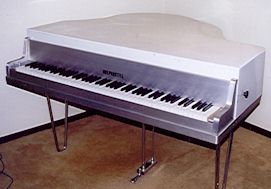
| Baldwin Combo
Harpsichord (USA) |
Harpsichord action: plucked strings; electromagnetic pickups. | Combo
Harpsichord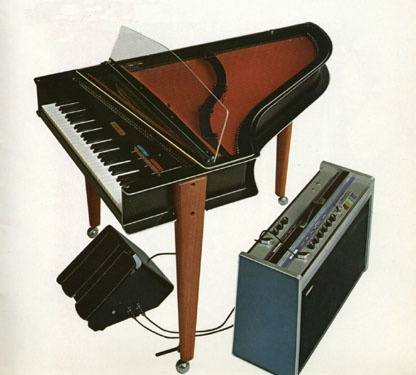 |
Mid - late 1960s | Jump menu:
The world's first and only solid-body electric harpsichord, with an extruded aluminium frame/body, bright red dummy "soundboard", and clear perspex lid and music rack. Looks like something out of the Jetsons, but was used on dozens of TV and movie scores, the Beatles used one ("Because" on Abbey Road) and the Beach Boys even took one on tour (along with a professional tuner). |
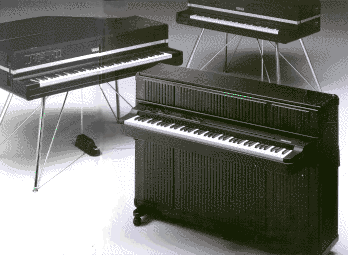
| Yamaha (Japan) |
Struck strings; traditional piano action; piezo-electric pickups |
CP-70, |
1977 -1985? | Jump menu:
Electric grands except CP-60M; electric upright. "M" models incorporated MIDI output. CP-70 had 73-note keyboard, CP-60M had 76. CP-10, CP-20, CP-30 are unrelated ELECTRONIC pianos. |
| Lawrence (Netherlands/Ireland) |
Struck strings; traditional piano action
with soundboard; electromagnetic pickups |
Lawrence
Audio-Piano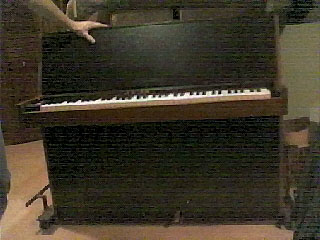 |
Late 1960s-1970s? |
Jump menu:
The piano's action is mostly made from plastic, making damaged instruments difficult to repair. Nonetheless, Stevie Wonder recorded with one and appeared in advertising. |
| LeSage (Canada) |
Struck strings; traditional piano action; electromagnetic pickups | LeSage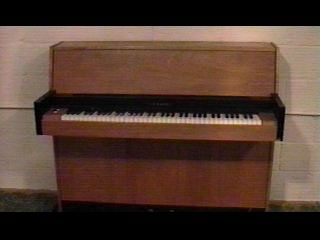 |
Late 1960s-1970s? | Jump menu:
Small (73-note) electric upright; no soundboard. |
| Helpinstill (USA) |
Struck strings; traditional piano action
with soundboard; electromagnetic pickups |
Roadmaster 88 |
Mid-1970s - early 1980s | Jump menu:
Acoustic pianos (made by Kimball) designed to fold up for transport and fitted with Helpinstill's acclaimed pickups. Roadmaster 64 had shorter (64-note) keyboard. |
| Kawai (Japan) |
Struck strings; traditional piano action; piezo-electric cable pickups | Various grand
and upright
models, some with MIDI.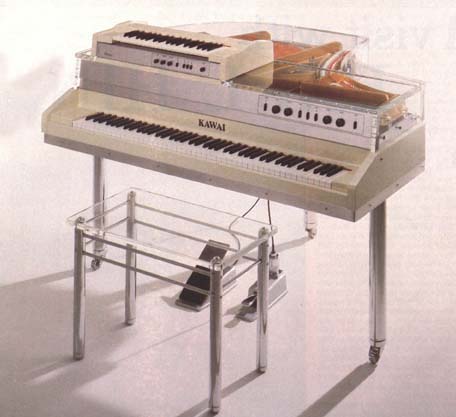 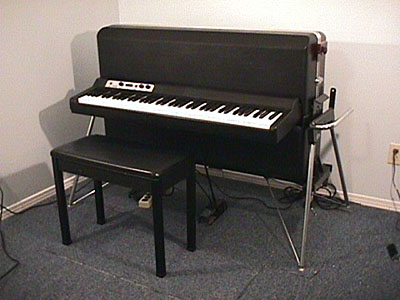 |
Early to mid-1980s | Jump menu:
Similar to Yamaha's designs, but sounded more acoustic. Some had MIDI output. |